
"The Many Folktales of The Firebird"
- Matina Banks
- Oct 18, 2022
- 3 min read
Updated: Dec 8, 2022

And in my dreams I see myself on a wolf's back
Riding along a forest path
To do battle with a sorcerer-tsar (Koschei)
In that land where a princess sits under lock and key,
Pining behind massive walls.
There gardens surround a palace all of glass;
There Firebirds sing by night
And peck at golden fruit.
Child's verse by Yakov Polonsky, "A Winter's Journey" (1844)
The Firebird is a folktale that has captured the hearts and minds of cultures from all over the world for centuries. A powerful story about a larger than life magical bird that is immortal, embodies power, healing and the ability to overcome immense obstacles, the Firebird is often portrayed as an empowered female entity. "A prophetic glowing or burning bird from a faraway land which is both a blessing and a harbinger of doom to its captor." The Firebird has its roots in Slavic culture but variations of it exist in cultures from Iranian to German to Armenian.
Just have a look at all the different names that exist for The Firebird in Slavic mythology and folklore alone,
Russian: жар-пти́ца, Zhar-ptitsa
Ukrainian: жар-пти́ця, Zhar-ptytsia
Serbo-Croatian: жар-птица, Žar-ptica
Bulgarian: Жар-птица, Zhar-ptitsa
Macedonian: Жар-птица, Žar-ptica
Polish: Žar-ptak
Czech: Pták Ohnivák
Slovak: Vták Ohnivák
Slovene: Rajska/Zlata-ptica
The Firebird was such a powerful tale that in the early 1900's a ballet was commissioned to exemplify and empower her beauty and her story. What I find so fascinating about how the ballet came to be is all the bits and pieces of stories that came into her being. The above poem by Yakov Polonsky is what is considered the main inspiration for the ballet but as I dug a little further into the back story as part of my research for our upcoming book, The Firebird, there are several folktales in the Slavic region each with their own reach and diversity of characters that have gone into ballet.
The main stories that go into the Firebird includes three different folktales, (a few of the hundreds of folktales collected by Alexander Afanasyev.) The first is Tsarevitch Ivan, the Firebird and the Gray Wolf, a really fascinating story about a King who's garden is being thieved by the Firebird. His sons are instructed to capture the bird but his oldests are unsuccessful. Only his third son is able to capture one feather, but the magical bird makes her escape. Second is The Firebird and Princess Vasilisa where the Firebird's feather also plays a role and she is caught and a princess character is introduced. And finally, our wonderful villain, Koschei the Immortal. As all these above mentioned stories have dark pieces to them (much like Brother's Grimm), we changed Koschei to a magician so he was more relatable for young children. But he remains to all Slavic children the archetypal, the supreme male villain in all Slavic culture. Yeah he's a creepy dude...
As I mentioned we have based our ballet of the Firebird on all these wonderful elements of the folktale and the original ballet. There are a few main difference between our story and the ballet itself. For example in the ballet there are 13 princesses. We included one, the lead princess or Tsarevna (which is Slavic for princess) as we just didn't have the resources (or the physical space in the book.) Another thing I find so beautiful about all these stories is that there are so many different levels and characters and plots - this is a true folktale. And in case you were wondering about the Slavic connection - or more so the Russian - Ukrainian connection. At the time of the ballet's creation, these countries were one in the same. However, I like to think of the Firebird ballet as a healing connection, a healthy, loving, gift between these two countries that is made up of all the incredibly talented artists from this region, the entire Slavic region. After all, the composer of the ballet, Igor Stravinsky, grew up in St. Petersburg, Russia, however his family lived and maintained a home in Kyiv, the capital of modern day Ukraine.
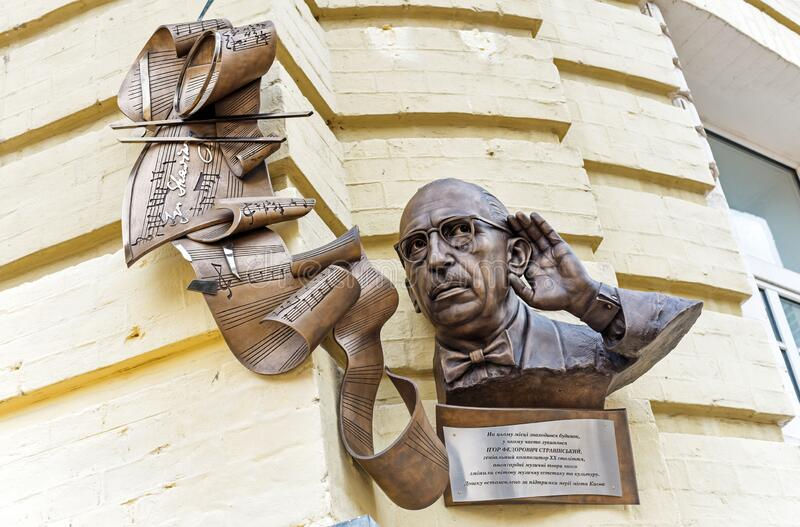
When it comes to storytelling and folktales there aren't strict boundaries that divide and give credit to one country over another. Stories don't have boundaries. They travel across geographical lines, they grow, they fade, they take different shapes, they affect and inspire us. It's one of the things that I love so much about ballet. All the different stories and folktales that go into it's creation. It's not just about the movement, for what is movement without a good story?
References and Further Reading:
More about the ballet:
More about the Firebird in Slavic Folklore: https://en.wikipedia.org/wiki/Firebird_(Slavic_folklore)#:~:text=The%20Firebird%20tales%20follow%20the,faraway%20land%20with%20the%20prize
More about the composer, Igor Stravinsky:


Comments